
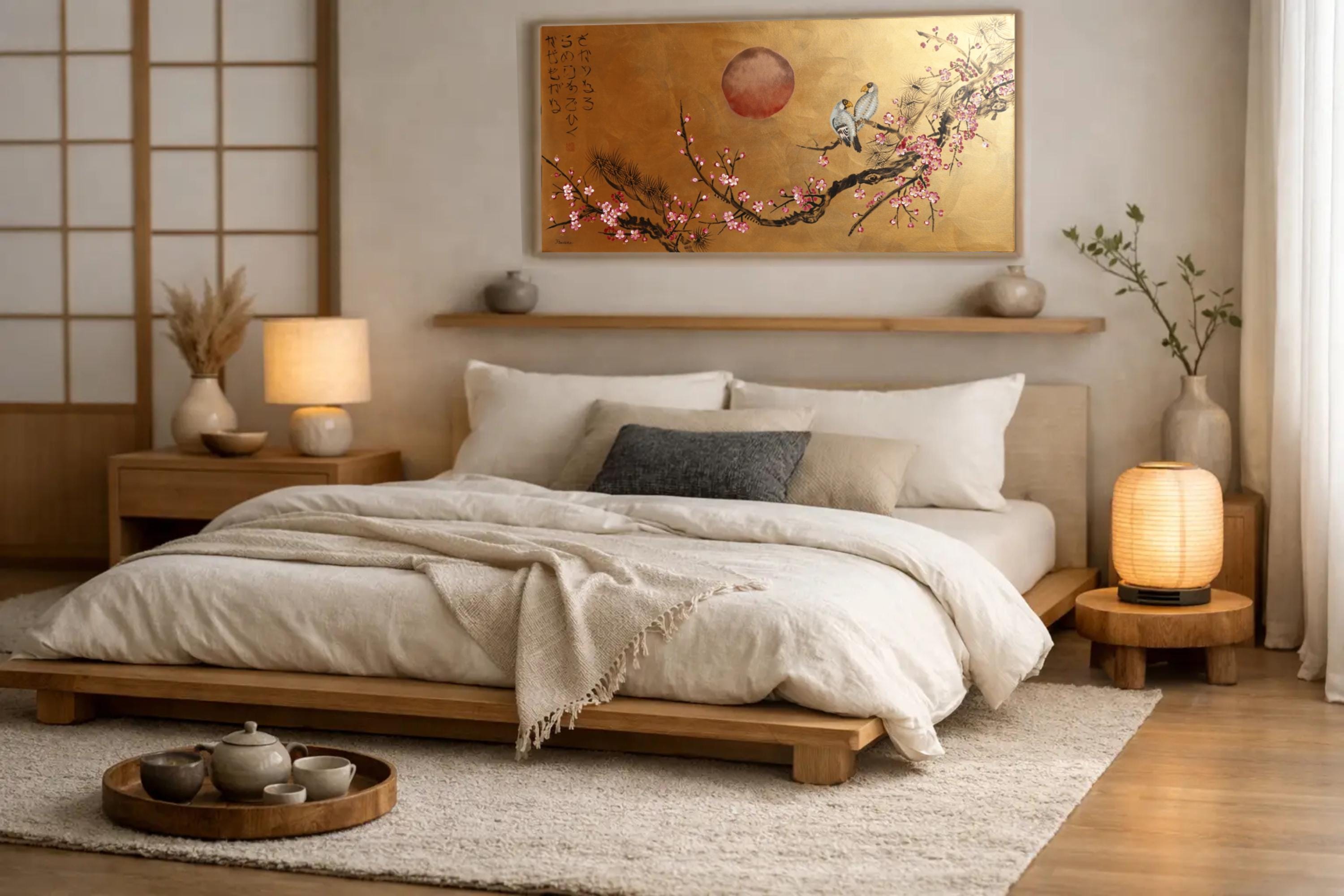
A sleeping room should feel quieter than the rest of the home, but quiet need not mean empty. A well-composed Japandi sleeping room uses restraint as a design tool: soft timber, tactile linen, low silhouettes and a limited palette establish calm, while a single original artwork gives the room a point of view. The result is not a themed interior or a catalogue-perfect imitation of minimalism. It is a personal retreat with visual breathing room. Japandi brings together the functional warmth associated with Scandinavian interiors and the Japanese appreciation of simplicity, craftsmanship and imperfection. For a bedroom, this is an especially convincing pairing. Both traditions make a case for fewer, better objects and materials that reward close attention.
The foundations of a Japandi sleeping room
The first decision is proportion. Japandi rooms tend to feel grounded because furniture sits low and the eye is not constantly interrupted by competing heights. A low oak or walnut bed frame, a simple upholstered headboard, and bedside tables with clean, unadorned profiles create a steady horizontal line. If the room has generous ceilings, this lower composition is even more effective, leaving a calm expanse of wall above the bed for art or simply light. Choose natural materials before decorative accessories. Timber with visible grain, woven wool, cotton, linen, paper, ceramic and stone all bring a room to life without demanding attention. Their appeal lies in variation: the slub of washed linen, the irregular edge of a handmade vase, the soft gleam of a limewashed wall. Avoid making every surface pale and matte, however. A room made entirely from beige textiles and blond wood can become visually flat. A more convincing scheme uses contrast with care. Pair light ash or oak with a charcoal bedside lamp, warm off-white walls with an umber cushion, or oat-coloured bedding with a deep moss-green throw. Black can provide definition, particularly in a lamp base, picture frame or slim metal detail, but it works best in small, purposeful doses rather than as a dominant industrial accent.
Build a palette with depth, not noise
Begin with two or three quiet neutrals: chalk, mushroom, stone, putty, soft grey or warm taupe. Then introduce one or two nature-led tones that make the space feel more settled. Muted olive, ink blue, clay, rust, plum-brown and forest green all suit the Japandi mood when used sparingly. The lighting in the room should influence this choice. North-facing rooms often benefit from warmer wall colours and timber finishes, while strongly sunlit spaces can carry cooler mineral tones. Paint swatches viewed at midday are not enough. Look at them in the early morning and evening, when the sleeping room is most likely to be used. A colour that appears elegant in bright daylight may feel cold under a bedside lamp.
How to choose art for a Japandi sleeping room
Art is often treated as the last styling decision. In a Japandi bedroom, it can be the element that prevents restraint from becoming anonymity. The best piece does not need to be loud. It needs to carry material presence, tonal confidence and enough visual complexity to reward a slower look. Japanese-inspired art is a natural fit, provided it is selected with discernment rather than used as decoration by formula. A contemporary painting of cranes can bring a sense of grace and movement above a bed. A sakura-inspired composition may introduce seasonal softness without turning the room overly sweet. Abstract work is equally compelling: layered neutral fields, gestural forms, subtle geometry or a softened black-and-gold composition can echo the room's balance of precision and warmth. For a refined, gallery-like result, consider the relationship between the artwork and the furniture below it. Above a double or king-size bed, a wide single canvas, diptych or triptych usually feels more resolved than a small piece centred in a large wall. Aim for artwork that occupies roughly half to two-thirds of the bed width. This is a useful visual guide, not a rigid rule. In a compact room, one vertically oriented painting may create welcome height without crowding the wall. A handmade painting offers particular value in this setting because texture changes with the light. Thick acrylic passages, pearlescent layers or restrained gold accents can catch the low evening glow and give a pared-back room a richer atmosphere. At KsaveraART, original contemporary and Japanese-inspired paintings are designed with this kind of decorative presence in mind: expressive enough to define a wall, yet considered enough to live beside quiet materials.
Frame, canvas or multi-panel work?
The format should follow both the wall and the mood you want to create. An unframed canvas feels contemporary and direct, particularly when the painted edges are finished neatly. A slim natural oak frame adds warmth and makes an artwork feel more architectural. Black framing gives a sharper graphic effect and can tie together darker lighting or hardware. Diptychs and triptychs are especially effective in a Japandi sleeping room because the intervals between panels introduce rhythm. They suit wide headboards and allow an abstract composition to stretch across a wall without becoming heavy. Keep the spacing consistent, usually narrow enough that the panels still read as one work. If you prefer one statement canvas, choose a composition with open areas of colour or space. Dense, highly detailed imagery can feel restless when viewed from bed.
Create calm through layers, not clutter
Japandi is sometimes mistaken for an instruction to own very little. The more useful principle is intentional editing. Every object should either support rest, solve a practical need or contribute genuine beauty. A reading lamp, a small ceramic dish, a branch in a vessel and one or two books may be enough for a bedside surface. Bedding is where the room can become more generous. Start with plain linen or cotton in an off-white, grey-beige or stone shade, then layer a textured coverlet and a folded wool throw. The aim is tactile comfort rather than hotel uniformity. Use fewer decorative cushions than you might in a more traditional bedroom, but select covers with weave, embroidery or a subtle tonal pattern. Natural texture gives the bed dimension without introducing visual chatter. Storage deserves the same discipline. Closed bedside drawers, a simple wardrobe front and woven baskets for the few visible essentials will preserve the room's calm. If you need open shelving, leave space around the objects. A ceramic vessel, a small stack of books and a single sculptural piece will look more considered than shelves filled edge to edge.
Let light soften the architecture
Harsh overhead lighting is at odds with a restful scheme. Use a warm bulb at the bedside and, where possible, add a second low-level source such as a paper-shaded floor lamp or wall sconce. Paper, linen and frosted glass diffuse light beautifully, while brass or dark metal details can add definition. Window treatments should offer privacy without making the room feel sealed off. Linen curtains in a soft neutral create an elegant, filtered light during the day. In rooms where complete darkness is needed, combine them with a discreet blackout blind rather than choosing heavy drapes as the only layer. The practical requirement matters: a beautiful room that does not support sleep has missed the point.
Avoid the common Japandi shortcuts
The fastest way to weaken this look is to rely on symbols rather than atmosphere. A bamboo screen, a collection of identical ceramic vases and a generic branch print do not automatically create a Japanese influence. They can make the room feel staged, especially when every item is new and visually weightless. Equally, avoid stripping out all character in pursuit of minimalism. A sleeping room without personal art, crafted objects or tonal variation may photograph well but feel impersonal over time. Japandi is at its best when it balances order with evidence of life: an original painting chosen because it resonates, linen that becomes softer with use, wood that shows grain rather than a plastic-perfect finish. There are practical trade-offs, too. Pale rugs and bedding are serene but less forgiving in homes with pets or young children. Darker earth tones may be more liveable while preserving the same mood. Low beds look sculptural, yet they may not suit everyone’s comfort or mobility needs. Use the aesthetic as a framework, then adapt it to how you actually rest. A Japandi sleeping room becomes memorable when it feels composed rather than decorated. Let the materials stay honest, allow empty space to do some of the work, and choose one piece of art with enough depth to make the quiet feel intentional.